Andrei – a doua obiectie
10 decembrie 2017 90 comentarii
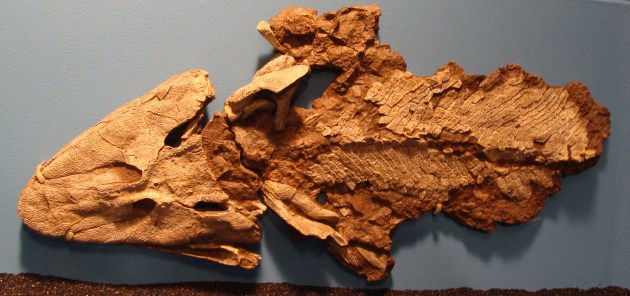
Tiktaalik
Consensul expertilor in stiintele vietii este acela ca evolutia este un fapt. La care Andrei va raspunde ca stiinta nu este o problema de consens.
Am spus “consensul expertilor in stiintele vietii”. Consensul majoritatii populatiei este diferit, mai ales in tari ca Turcia, Romania, si acea parte a populatiei US care este prizioniera unui sistem de educatie controlat de comitete locale fundamentaliste. Nu este vorba aici despre acel consens care se obtine prin vot sau sondaje de opinie, ca in politica, ci despre un proces colectiv care incepe cu republica scrisorilor in secolul XVII si continua astazi cu mecanismul de peer-review, care, intr-adevar, nu este lipsit de influente subiective, dar reprezinta cel mai bun mecansim de autocorectare pe care il avem. Si da, consensul participantilor la republica literelor („expertii” timpului) in secolul XVII a fost acela ca Galileo avea dreptate. Consensul filozofilor si teologilor era ca heliocentrismul este doar o teorie (suna familar). Consensul public era ca Galileo bate campii. Istoria se repeta.
Asta nu inseamna ca trebuie sa acceptam tirania expertilor. Putem cauta sa intelegem argumentele.
Ca amator, am inteles sapte fapte esentiale cu privire raportul fosilelor.
- Predictibilitatea. Poti sti ce fel de fosile vei gasi intr-un strat geologic pe baza pozitiei lui in coloana geologica.
- Datarea stratigrafica nu este circulara. Stratul este datat pe baza fosilelor index, care sunt cochilii si crustacee marine, de multe ori microscopice. Pe baza fosilelor index stii ce animale si plante fosilizate vei gasi in sedimentul respectiv.
- Fosilele nu sunt datate radioactiv in mod direct. Sedimentul in care s-au gasit este datat intre varsta stratului de magma pe care a crescut si un alt strat de magma vulcanica care a erupt deasupra lui. De aici expresii ca “intre 50 si 60 miloane de ani”, care nu exprima lipsa de precizie a datarilor radioactive, ci faptul ca sedimentul se afla intre doua placi cristaline de varste diferite.
- Datarile radiometrice, datarile stratigrafice, istoria tectonica si istoria impacturilor de comete/asteroizi sunt in armonie si se armonizeaza la randul lor cu arborii filogenetici.
- Fosilele intermediare sunt stabilite in primul rand pe baza unor caracteristici anatomice accidentale care s-au transmis de-a lungul cladei. De exemplu faimosul Tiktaalik nu este considerat stramosul amfibienilor numai pentru ca are trasaturi mixte de peste si amfibian, si pentru ca este cu 12 milioane ani mai vechi decat primii amfibieni. Argumentul principal este acela ca scheletul membrelor are structura osoasa a tuturor vertebratelor terestre care au urmat pana astazi, indiferent daca sunt picioare, aripi sau inotatoare. De la reptila incoace, pasarile si mamiferele se dosebesc prin orificii in craniu intalnite la doua grupe distincte intre reptilele primitive. Osul urechii la mamifere se intalneste in falca reptilelor unde nu are nici un rol legat de auz. Etc.
- Avand in vedere raritatea fenomenului de fosilizare, nu ne putem astepta sa gasim seria completa a tuturor cladelor. Se cunosc insa destule fosile tranzitionale ca sa elimine indoiala rezonabila.
- Exista o disputa intre scoala modelului clasic al lui Darwin si teoria echilibrului punctat, propusa in 1972 de Niles Eldredge si Stephen Jay Gould. Creationistii citeaza numele lui Gould ca si cum s-ar fi indoit de procesul evolutionar si ar fi sustinut aparitia abrupta a formelor de viata noi. Cei doi sustin doar radiatia rapida a unor mutatii avantajoase in conditii de schimbare haotica (vezi astroidul din Yukatan), in relatie cu perioade in care dinamica populatiilor este constanta. Gould insusi a denuntat creationismul si ID ca pseudostiinte, si a fost expert-martor impotriva introducerii ID in scoli la procesul din Dover. Referinta la Gould la sfarsitul postului lui Andrei, probabil imprumutata din literatura creationista, dovedeste ignoranta lui.
Daca aveti timp, cititi a doua parte a postarii lui Andrei, cu privire la raportul fosilelor, si observati omul de paie. Consider conversatia incheiata.
 oxigen2
Edi,
I understand you believe Evolution to be fact. I understand you are content resting on the consensus of science which preaches that belief. That’s perfectly fine and to be honest, I expect nothing more from a dilettante. You have made up your mind, just as many others have, and no amount of evidence to the contrary or other inconvenient facts are going to shake your faith. I would congratulate you but it’s nothing to be proud of.
All the fossil data in the world – which as you admitted is low – actually adds up to about 1% of the total that exists still unearthed. In other words, all of the paleontology finds that scientists have used to assign dates to extinct creatures, to tell Evolution’s story of millions of years, and to add branches to Darwin’s Tree of Life amount to 1% of what actually exists. The same goes for all of the bacterial genetic information we currently have, since we have only identified about 1% of the total bacteria estimated to exist. So I would ask: how logical is it to base a theory on just 1% of the available evidence?
This would not be problematic if newly discovered evidence would corroborate the initial theory and help support this Tree of Life phylogeny you think is so important. But “phylogenetic trees are hypotheses, not definitive answers, and they can only be as good as the data available when they’re made (From your Khan Academy link).” And as more evidence is literally dug up, we have gotten to the point where in only 10-20 years, our ideas and what we thought we knew is undergoing significant and undeniable revisions.
The two biggest factors contributing to this seismic shift are the discovery of soft-tissues within fossilized remains and the resulting genomics studies that can be performed. Soft-tissues – blood vessels, blood cells, proteins, pigments, oils, even DNA, etc. – are now being routinely found in fossils. This is still a bitter pill for scientists to swallow since their initial discovery about 20 years ago that resulted in denial, disbelief, and accusatory attacks. I don’t need to cite papers here, you should know the controversy.
To date, no mechanism or lab-reproduced process can adequately explain the exquisite preservation of these extremely sensitive soft-tissues in fossils purportedly millions of years old. No biochemical process is known to exist that we can look to for help. A few iron studies were performed, but were incapable of reproducing the required variables or conditions and could not be used to support the idea. As a result, the only solution is for scientists to claim that this preservation is more common than thought and is likely to result in more soft-tissue finds in the future. If you can’t beat ‘em, join ‘em.
It is now possible to study the genetic information found within these soft-tissues. In doing so, scientists have no choice but to admit that the Tree of Life as it has been built up over the past 150+ years is being cut down by the evidence. What we have instead is a Web of Life, with interdependent organisms and bacterial relationships that span across entire clades of organisms, seemingly completely unrelated. The genetic studies tell us that we are looking at an increasingly complex Thicket or Bush of Life, not a simplistic drawing above which Darwin scribbled, “I think.” Due to this complexity, it is impossible to detail ancestral relationships with any certainty. Possible relationships, yes; proof of ancestry, no.
To add insult to injury, there have been several pioneering scientists who found carbon in some of these soft-tissues, including in dinosaur bone cells and proteins. Suffice it to say that their results are very problematic for geologic long age adherents and are thus currently very controversial. Carbon-14 should not be detectable in any sample claimed to be millions of years old. However, more studies are being conducted as we speak and more carbon is being found in what were assumed to be fossils millions of years old.
I listed a few links below that demonstrate some of these finds and encourage your readers to judge for themselves what is more likely to be the case: that Darwin and his zealous disciples are wrong and are being slowly overturned by the evidence, or if the evidence further establishes this theory which is not even allowed to have any opponents in academia. Note that none of these are from any creationist site you constantly complain about me visiting. They are reputable journals or science journalism sites and I found them in about 30 minutes.
You’re right: as far as you’re concerned the conversation is ended. No additional evidence, nor its interpretations, will convince you to rethink what’s possible and what’s not. Hold fast to that consensus life-preserver, because if you let go you’ll actually have to deal with an ocean of logical and statistical impossibilities required for Evolution to even be tenable, much less an established fact; only in your dreams. There is nothing to discuss with a closed-minded, outdated and stubborn dilettante.
––
http://www.telegraph.co.uk/news/science/4312355/Charles-Darwins-tree-of-life-is-wrong-and-misleading-claim-scientists.html (Tree of Life is wrong, it’s a Web instead.)
https://gizmodo.com/5912344/there-is-no-tree-of-life-but-a-networked-web-of-life (Great artistic interpretation.)
http://rspb.royalsocietypublishing.org/content/284/1865/20171050 (Oil gland in 48Myo bird.)
https://www.nature.com/articles/s41598-017-13187-5 (Protein and pigment in 54Myo turtle.)
https://www.nature.com/articles/548156a (Dinosaurs weren’t wiped out by Yucatan asteroid; they were dying off anyway. Plenty of mammals during Cretaceous era, didn’t require dinosaurs to die off in order to thrive.)
http://pubs.acs.org/doi/10.1021/acs.jproteome.5b00675 (Blood vessels of dinosaurs.)
https://phys.org/news/2017-06-collagen-tyrannosaurus-rex-bone-jurassic.html (Collagen proteins in T. rex bone.)
https://www.nature.com/articles/ncomms8352 (More soft-tissues in 6 of 8 specimens tested; preservation is more common that thought. Ok, but how? Explain the mechanisms.)
https://www.nature.com/articles/548156a (90Myo birds living alongside dinosaurs, so not evolved from them.)
https://phys.org/news/2017-09-non-avian-dinosaur-laid-blue-eggs.html (100+Myo dino egg coloring pigment.)
https://www.nature.com/news/dinosaurs-spiky-armour-may-have-been-status-symbol-1.22511 (110Myo spiky armor soft-tissue protein with color.)
https://www.sciencedaily.com/releases/2017/07/170704093916.htm (200Myo leaves with organic molecules that were analyzed and prove similar to current ones.)
https://phys.org/news/2017-09-ancient-amphibian-mouthful-teeth.html (287Myo amphibian with teeth. Why no teeth in today’s amphibians? Why would evolution lose something important?)
https://www.sciencedaily.com/releases/2017/07/170724105041.htm (300Myo yet “modern beetle.”)
https://www.newscientist.com/article/2141881-oldest-mass-animal-stranding-revealed-in-death-valley-fossils/ (540Myo jellyfish fossils in Death Valley. How can such soft bodies be preserved without being destroyed in the process and remain intact that long? Plus they look just like modern jellies.)
http://www.bioone.org/doi/abs/10.1666/13-003 (540Myo soft-tissues from metazoans.)
http://www.pbs.org/wgbh/nova/next/evolution/new-fossils-push-back-earliest-single-celled-skeletons-200-million-years/ (Single-cell organism skeleton pushed back by 200My; now they’re 810Myo. 200My is a vast amount of time; how could they be so wrong?)
https://www.nature.com/articles/ncomms11500 (1.5Byo eukaryote fossils, 1By older than ever thought possible.)
https://www.nature.com/articles/ncomms11977 (1.9Byo soft-tissue and organic structures found in the Gunflint cherts.)
https://www.upi.com/Science_News/2017/09/27/Study-395-billion-year-old-rocks-contain-earliest-traces-of-life/8681506545474/?st_rec=9831512507658 (Fossilized remains of a nearly 4 billion-year old fossil. What does this find do to the “Late Bombardment Theory” that precludes any chance for life appearing this early?)
http://www.pagepress.org/journals/index.php/antiqua/article/view/antiqua.2011.e1/pdf_1 (Carbon14 found in Holocene and Pleistocene bone fossils dating at least 1.5Myo.)
http://journals.plos.org/plosone/article?id=10.1371/journal.pone.0019445 (Carbon14 in mosasaur bone corresponding to an age of 24,600 yrs, not 60+Myrs.)
Andrei,
Raspund in romana pentru cei care nu citesc engleza. Voi alege ultimul argument ca exemplu. Titlul articolului a fost reformulat ca sa fie misleading. Carbon14 found in Holocene and Pleistocene bone fossils dating at least 1.5Myo. Tilul real este : Microspectroscopic Evidence of Cretaceous Bone Proteins.
E Cretacic sau e Pleistocen? Cele doua sunt despartite de 60 milioane ani.
Citez din abstract:
Am pus in bold fraza cheie. Nu este vorba despre falsificarea teoriei deep time, cum sugerezi, ci despre testarea ipotezei „biomloecular preservation in deep time”. Ai ignorat faptul ca exista o astfel de ipoteza si ca datele descoperite nu sunt suficiente pentru a o testa. Chiar daca ipoteza ar fi fost testata, nu ar fi constituit o falsificare a timpului adanc ci baza unei teorii despre conservarea materialului biomlecular in timp adanc.
Hai sa trecem la carbon 14:
Nu e nimic nou aici. S-au gasit 5 miligrame de carbon intr-o fosila, din Cretacic, (Pleistocen sau Holocen?). Fosilele, nu numai din pleistocene, dar si din cretacic, contin inca urme de carbon. Cautarea zacamintelor de petrol se bazeaza pe analiza carbonului fosil din timp mult mai danc decat Pleistocen. Cu cat fosila este mai veche, cu atat urmele de carbon sunt mai rare. Pleistocene/holocene sunt recente in timp geologic.
Titlul pus/citat de tine lasa sa se inteleaga ca ar fi avut loc o datare cu izotopi de C14-C12 a fosilei respective, ceea ce e fals.
Am ales doar ultimul titlu, inainte de a citi articolul. Folosesti metoda tipica YEC. Scoti textul din context si il interpretezi in asa fel ca sa se potriveasca cu naratiunea ta. Apoi acuzi pe cel care nu se lasa mintit ca isi inchide mantea la argumente.
O alta problema tipic YEC este argumentul din ignoranta:
Mai intai, faci iarasi o confuzie. Nu este vorba de 1% din ce exista si nu a fost desoperit ci de 1% din ce a existat si s-a pastrat.
Doi, asta zice si amicul meu care crede ca pamantul e plat: „exista atatea lucruri pe care nu le cunoastem”. Este un logical fallacy.
Mai departe. TE se bazeaza pe fosilele care exista si au fost descoperite. Ar fi suficienta o singura fosila care sa contrazica predictiile evolutiei, pentru ca evolutia sa fie falsificata. Eu accept evolutia (nu e vorba de credinta) din cauza ca modelul nu a fost falsificat si nu exiista un model stiintific alternativ. YEC si ID nu sunt teorii stiintifice pentru ca nu ofera niciodata un test de falsificabilitate.
Edi,
I’m not changing the titles of the publications. I’m pointing out that within those published works there are references made to the existence of carbon-14, in sufficient quantities to be detected and analyzed. The authors must discuss this in the context of deep time, or else fail Darwin and risk not getting published.
While it’s not the overall goal of the paper, and I didn’t claim it is, I point it out for those that maintain no carbon-14 is ever found in detectable quantities in „ancient” fossils. From a small bone weighing 2 grams they were able to produce 5 milligrams of carbon. That sounds like a small amount but there should be NONE to detect if it was truly fossilized and no organic (eg, carbon) compounds were preserved.
This small amount of carbon gave them an age result of 24,600 BP, which they must ignore based on deep time convention. They cannot begin to even raise the prospect that the bone they found may not millions of years old but only a fraction of that.
I did not bother to mention coal, oil and natural gas deposits which have substantial amounts of C-14. And let’s not forget about diamonds as well.
The simple fact of the matter is that NONE of these types of samples should contain any detectable C-14 if they are as old as scientists claim they are. No amount of contamination, atmospheric or otherwise, should result in C-14 being found.
I’m not taking things out of context, I’m pointing out inconvenient details that they have to admit even if it’s not the dedicated topic or title. This is my point.
If C-14 is found in any sample, then it cannot reasonably be millions of years old. End of story.
Moreover, there is no rebuttal for the existence and preservation of soft-tissues and proteins such as collagen and keratin. We’re talking about stuff like your fingernails existing for tens of millions of years without being broken down and still being recognizable. That is unheard of and no biochemical process exists nor can we imagine one that would explain it.
Problema este ca YEC, desi pare cel mai compatibil cu crestinismul „biblic”, nu mai poate fi sustinut cu argumente stiintifice. Ideea ca ar fi fost o vreme cand oamenii au convietuit cu tiranozaurii este una comica. In plus, toate datarile radiometrice folosind diferiti izotopi converg catre aproximativ aceleasi rezultate. Prin ce minune le-ar fi potrivit Dumnezeu sa iasa asa toate? Le-a setat ca sa ne pacaleasca? Ca repet, nu e vorba de un singur izotop, ci de mai multi, si rezultatele sunt aproximativ aceleasi. Pe de alta parte, daca s-ar fi gasit un singur om in acelasi strat geologic cu un dinozaur, YEC avea castig de cauza, sau un singur mamifer in cambrian. Dar nu se gaseste. Nicaieri pe suprafata pamantului nu se gaseste un singur mamifer in cambrian. Mai mult decat atat, asa cum arata Donald Prothero, 80 % din coloana geologica este formata numai de microorganisme. Cu alte cuvinte, desi se intalnesc bacterii inclusiv in straturile superioare (bacteriile traiesc si astazi), 80% din grosimea straturilor incepand de jos nu contine nimic altceva decat bacterii. Asta ar trebui sa puna pe ganduri orice creationist onest.
„no amount of evidence to the contrary or other inconvenient facts are going to shake your faith”
Incep sa cred ca esti un strigoi si nu-ti poti vedea reflexia in oglinda.
AV,
Nu poti argumenta cu flatheartheri.
Andrei,
Exista un motiv pentru care zacamintele de gaz natural, petrol, etc, nu sunt folosite in datari radiometrice. Din cate inteleg, C14 in aceste zacaminte provine din uranium-thorium decay.
Cat priveste fosila de dinozaur, a fost deja datata stratigrafic. Nu se poate face datarea cu C14 la o fosila atat de veche. Urmele de material organic, daca origineaza la dinozaur, ceea ce nu este sigur, sunt prea mici pentru a fi vechi de numai 25k. Singura explicatie este ca, daca exista, s-au pastrat dintr-un motiv sau altul. Vechimea Cretacicului este deja stabilita dincolo de indoiala.
Hai sa incercam metoda socratica:
Stratul Cretacic a fost masurat peste tot unde a existat material radiocativ care sa permita aceasta, cu diversi izotopi, si rezultatele se armonizeaza.
S-au gasit cateva miligrame de carbon intr-o fosila din cretacic si posibile urme de tesut organic. Nu s-a facut o datare cu C14 pentru ca nu exista cantitatea suficienta de izotopi mama/fica.
Intrebare pentru Andrei: Unde este burden of proof?
Edi, posibile urme? Nu s-a facut datarea de c14? Ai citit articolul macar?
The last sentence of the abstract concludes: „the preservation of primary soft tissues and biomolecules is not limited to large-sized bones buried in fluvial sandstone environments, but also occurs in relatively small-sized skeletal elements deposited in marine sediments.”
So in this small bone found in marine sediment they not only found soft tissues, they also identified them: collagen, osteocytes (actual bone cells), vessels, and amino acids aspartic acid, serine, glutamic acid, glycine, and alanine.
The burden of proof is primarily on the evolutionist to explain how these organic sensitive, delicate structures within the bone (not the geologic layer!) have resisted degradation for tens of millions of years. To date, no process has been identified or adequately explained.
Secondly, enough c14 was found that they DID run an age analysis which yielded 24,600 years. Since that goes against all accepted numbers they leave this aside.
Any c14 analysis which gives you an age up to 60k is not only reliable, but it MUST be dealt with.
If this small and insignificant bone from a mosasaur contains c14, is it possible that other bones of other dinosaurs which also contain soft tissues may contain c14? What would this mean? If there is any testable c14 and it gives you an age less than 50k-60k, you have to explain that.
My point in linking the article was to show 2 things: (1) soft tissues are being found that should’ve been completely disintegrated within several hundred to thousand years by the chemical decomposition processes we know of and that we’ve worked with for over 60 years, and (2) c14 can be found in the actual bone fragment sample which is testable and yields an age.
These two inconvenient facts must be properly examined and explained. The mechanisms that drive the process by which these structures have resisted breakdown need to be investigated because by all known chemical reaction calculations THEY SHOULD NOT EXIST. Get it?
The simple fact of the matter is that these proteins and amino acids would have decomposed in several hundred or thousand years, since the energy required to maintain the peptide bonds would be overcome. This is how entropy works, to breaks things down into the constituent elements. Organic molecules are not static, they react to their immediate environment. Just as it takes energy to create peptide bonds in the first place (to assemble amino acids into proteins), it takes energy to maintain them.
I’ve spent years doing lab work like this and doing calculations involved in chemical reactions, energy input/output and the like.
You are missing the forest for the trees and argue about things you clearly don’t understand or just don’t want to.
First damn search result https://www.economist.com/news/science-and-technology/21590874-how-remnants-dinosaur-tissue-have-survived-millions-years-life
Instead of a journalism piece which is light on details and heavy on conjecture, let’s just provide the study itself: http://rspb.royalsocietypublishing.org/content/281/1775/20132741
Now if you read carefully and understand it, you will notice a few important factors:
(1) the iron-rich RBC lysate concentration is much higher than what we find naturally occurring in blood. They basically used a solution that would not normally exist.
(2) the „control” solution is simple water, which is not at all representative of the conditions dinosaur fossils are found in. They are instead usually embedded in dry rock. Water accelerates decay and this makes their comparison to iron that much more strident. (We call it stacking the deck.)
(3) while iron may help inhibit microbe formation and subsequent decay, it does not adequately inhibit oxidation and hydrolysis which turn bones and other tissue into dust eventually.
(4) the usefulness of iron to preserve these tissues is inversely related to their being detected in the first place, which means the very process that might preserve them would also make them undetectable. Obviously we’ve detected them, so it can’t conclusively be the iron free radicals.
(5) and most important is that the contemporary samples treated with RBC-rich lysate have only survived 0.000025% of the assumed age of the fossil sample. If 2 years is the same as 80 million, your confidence level is unreasonably and unrealistically high.
The study concludes: „…iron may be only one of many metals playing a role in exceptional fossil preservation. Whatever the exact mechanism, iron removal by chelation may increase the number of fossil samples amenable to molecular analyses.”
Saying that iron „may play a role” does not definitively make it so. Follow that with „whatever the exact mechanism” (which still eludes them to date) makes it clear that this is just one avenue being investigated but has yet to yield conclusive evidence.
Accepting it at face value requires significant faith and little critical thinking.
Keep trying.
AV,
Salut si scuze ca n-am raspuns mai devreme si la alte comentarii. Incerc acum:
„Ideea ca ar fi fost o vreme cand oamenii au convietuit cu tiranozaurii este una comica.”
Pai de ce? Daca iti poti inchipui oameni convietuind cu mamuti care acum sunt extinct, sau cu sabertooth tigers care si ei sunt extinct, de ce nu dinozauri? Si in acelasi fel cum oamenii au vanat acestia pana la disparatie, (precum buffalo de exemplu), in acelasi fel ar fi putut contribui spre disparitia lor din fauna.
Asteroidul care a lovit in Yucatan nu ar fi fost nici singura, nici principala cauza pentru disparitia dinozaurilor; se crede ca ei erau deja pe calea disparitiei (vezi https://www.nature.com/articles/548156a)
„In plus, toate datarile radiometrice folosind diferiti izotopi converg catre aproximativ aceleasi rezultate.”
Am foarte multe indoieli cu privire la datarile radiometrice facute cu orice fel de izotopi. Vezi http://www.sciencemag.org/news/2011/11/earths-time-capsules-may-be-flawed si https://phys.org/news/2017-10-zircon-earth-timekeeper-clock.html doar pentru inceput.
Pentru mine, mult mai important este faptul ca C14 este gasit in cantitati suficiente pentru a fi analizat. Rezultatele arata ca multe tipuri de fosile din straturi geologice diferite au varste similare, efectiv intre 20k-30k de ani.
Intradevar, asta nu dovedeste perspectiva YEC, avand in vedere cei 6k de ani calculati dupa generatiile din Geneza, dar nu asta este problema.
Problema este ca aceste varste, obtinute prin datarea facuta cu C14 inca prezent in fosile (nu in piatra din care le-am scos) falsifica in mod exagerat milioanele de Darwin years. Daca ar fi doar o singura instanta, n-am avea foarte mare motiv de dubiu. Dar cand mai toate fosile la care ne-am uitat cu atentie contin C14 si arata varste de cateva zeci de mii de ani, si nu milioane, ceva nu e in ordine, sau cineva minte.
Discutia e departe de-a fi incheiata, decat pentru cine are mintea incuiata.
Eu cred ca daca s-au gasit tesuturi moi in fosile de dinozaur, nici evolutia nici creationismul nu pot explica asta. Fiindca daca aceste tesuturi nu ar mai fi trebuit sa existe dupa 80 de milioane de ani, ele nu ar fi trebuit sa existe nici dupa 20 de mii de ani, cat pretind creationistii ca au aceste fosile. Pe de alta parte, din metodele de datare radiometrice, care sunt suficient de precise incat sa nu dea erori atat de mari, stim ca aceste fosile nu au 20 de mii de ani, ci mult mai mult. Dar as vrea sa spun o parere si despre relatia acestor paradigme cu crestinismul. Dupa parerea mea, atat evolutia cat si creationismul progresiv, ridica aceleasi probleme pentru crestinismul traditional : existenta suferintei si a mortii in lume anterior pacatului adamic. Ba mai mult, creationismul il face pe Dumnezeu direct raspunzator de suferinta si moartea din lume. Apoi mai exista o intrebare : daca Dumnezeu a creat in etape toate aceste lighioane urmate de extinctii in masa, de ce ar fi creat Dumnezeu in mod direct aceste masini perfecte de ucis si reptile oribile precum tiranozaurul, gigantozaurul, spinozaurul, mezozaurul si alte dihanii oribile ? Ce sens avea?
Iar daca aceste resturi de tesuturi moi nu ar mai fi trebuit sa existe nici dupa 80 de milioane de ani, dar nici dupa 20 de mii de ani, inseamna ca exista un mecanism insuficient explicat de a prezerva aceste tesuturi perioade mai lungi. Asta nu inseamna ca creationismul a rezolvat ceva cu asta. Nu a rezolvat nimic. Repet, aceste tesuturi (vase de sange, colagen etc), nu au cum sa reziste mii de ani sau zeci de mii de ani. E practic acelasi lucru. Situatia nu are explicatie nici intr-un caz nici in altul.
Dupa cateva mii de ani, nu mai exista nici oasele, daramite vase de sange. Or eu cred ca nimeni nu sustine ca aceste fosile au cativa ani sau cateva zeci de ani. Ca de fapt, tesuturile moi nu rezista nici macar zeci de ani. Deci atunci care e explicatia ?
Andrei,
1.Nu s-a facut nici o datare cu C14. Singura datare este cea stratigrafica.
2. 5 mg de Carbon (in total) este o cantitate infima care s-a obtinut in laborator. Corpul uman contine cam la 16 kg C, nu stiu cat continea scheletul dinozaurului, cu siguranta mai mult. Presupunand ca e doar C14 daca am dubla cantitatea de 5 mg la fiecare 5000 de ani am avea ceva peste 10 mg pe vremea lui Noe cand ar fi fost ingropat de potop, 160 mg dupa 25 k asa cum sustii. Cifrele nu se potrivesc cu asertiunea ta. Insa datarile radiometrice au standarde mai inalte. Mai intai, exista metode noi de datare bazate pe nivelul de energie al electronului intr-o fosila ingropata. Chiar si C14 se face cu mai multe sample, pentru ca erori au loc tot timpul. Tocmai acest aspect speculat de YEG este ignorat acum.
3. Scheletul nu este tesut organic ci fosilizat. Inainte de a te intreba de unde provin urmele de tesut organic intreaba-te cand a avut timp sa se fosilizeze restul. Un oschelet nu se fosilizeaza in 5k sau 25k. Avem cadavre de mamut pastrate inca in Siberia atat de vechi. Inca nu am auzit de un dino care sa nu fie ca piatra.
4. TE face predictii masurabile care pot fi supuse unui test de falsificabilitate. Articolele citate din surse YEC nu se refera la predictii masurabile ci doar la necunoscute noi. Predictiile YEC au fost deja falsificate de ori de cate ori a fost dascoperita o fosila tranzitorie exact acolo unde trebuie, au fost falsificate prin decodarea ADN-ului cladelor stabilite stratigrafic, au fost falsificate de datarile radiometrice si stratigrafice, insa predictiile TE nu au fost falsificate. Intrebari noi nu inseamna falsificare ci doar cautarea de raspunsuri noi.
Exista altii care au petrecut ani in laboratoare mult mai moderne si ale caror lucrari pot fi citite in jurnale de specialitate. Prefer sa cred ce spun ei.
Noi nu suntem biserica din Atlanta Nord sau mai stiu eu ce secta de oameni ne-educati sa ne dai pe spate cu „am petrecut ani in lab si am constatat ca nu e asa cum se spune”. Intelegem bine cum fucntioneaza stiinta si stim ce sustine comunitatea stiintifica, nu trebuie sa ne explice cineva de la amvon intr-o sambata dupa-amiaza. Stim ca YEC este o frauda.
Inca ceva, Andrei, ca sa nu murim prosti.
1. Carbon 14 nu dispare, se injumatateste cam la fiecare 5700 de ani. E normal sa gsesti urme de C14 in orice sediment. Intreaba un geolog care cauta petrol si iti va explica ca se uita dupa sedimente in care exista mai mult C12 si mai putin C14, dar nu fac masuratori pe baza asta pentru ca ar fi misleading.
2. C14 se produce tot timpul in natura prin interactiunea radiatiilor cosmice cu nitrogen 14. Asta nu se intampla doar in atmosfera ci si sub pamant. De altfel savantii studiaza cantitatea de c14 in zacaminte petrol si gaz ca sa stabileasca gradul de penetrare a scoartei cu neutrino. Si, bdw, asta este important pentru cautarea materiei intunecate, unde inteleg ca ai alta problema cu stiinta.
3. Alta sursa de productie C14 este dezintegrarea uraniului radioactiv care este raspunzator pentru energia geotermala.
Talking about the big picture.
Hai sa fim putin dramatici.
Un om de stiinta masoara C14 intr-un diamant si, pe baza vechimii lui, incearca sa inteleaga care era nivelul de penetrare a scoartei cu neutrino atunci cand s-a format.
Vine un YEC si spune ca diamantul a fost facut de D-zeu acum 6k si ingropat la potop ca pedeapsa ca femeile purtau bijuterii.
Savantul raspunde ca magma in care a venit diamantul din adancimile pamantului s-a racit acum cateva sute milioane ani.
Andrei striga; „CONSPIRATIE”. Nu vor sa recunoasca ca diamantul a fost datat cu C14 si are doar 6k ani. Nu vor sa vada padurea din cauza copacilor.
Chestiile astea, prietene Andrei, merg la biserica.
AV,
„Deci atunci care e explicatia ?”
Depinde pe cine intrebi.
Sa nu uitam ca acum 10-20 de ani, nimeni in lumea paleontologiei nu se astepta – nici nu si-a putut inchipui vreodata – ca aceste tesuturi ar putea cumva sa existe. Dupa toate legile chimiei cunoscute, in special chimia organica, asa ceva nu e posibil. Numai daca si in prezent noi inca nu intelegem chimia organica dea-binelea, ceea ce ar fi posibil…poate.
Cei mai multi dinozaurologisti au refuzat cu orice pret sa admita ca acest lucru este posibil. In schimb, acuzatii au fost facute cum ca e contaminare, ori e „biofilm” ori fungus, sau orice altceva decat ce se vedea sub microscop. Unii inca refuza sa creada. Din cauza ca nu exista nici un proces sau mecanism dovedit care ar prezerva aceste tesuturi, este mult mai usor pentru ei sa spuna acum „e mult mai comun decat am crezut.” Pai da, ca nici chipuri nu ne-am gandit macar. „Thanks for nothing, Mary Schweitzer,” se aude si acum.
Cred ca cunosti cazul lui Mark Armitage, un microscopist creationist care si-a pierdut slujba la Cal State din cauza ca el sustine ca a gasit tesut moale la un tricerotop, si ca asta demonstreza ca dinozaurii au trait acum cateva mii de ani. Mostra s-a dovedita a fiind pliabila si foarte bine preservata, aparand destul de „proaspata,” ca sa zic asa. In fine, el a dat scoala in judecata pentru „wrongful termination” si a castigat procesul anul trecut.
Mentionez acest caz doar pentru ca este evident in mod direct ca, atunci cand vine vorba de Science si ce este acceptabil de a discuta, nici-o alta ipoteza nu este admisa decat „faptul” ca evolutia e singura explicatie.
Asa a invatat diletantul E.C. la scoala socialista comunista din Romania, si asa a ramas convins. Daca eu, care am studiat destul biologia (si inca o studiez) nu sunt convins deloc de viabiliatea evolutiei, pentru el eu sunt un „bible belt, brainwashed, flat-earther.” Cred ca l-am cam suparat.
„Vine un YEC si spune ca diamantul a fost facut de D-zeu acum 6k si ingropat la potop ca pedeapsa ca femeile purtau bijuterii.”
Really? Care YEC? Eu n-am pomenit nici unul.
That’s not what I’d say, despite the fact that we can now manufacture diamonds better than Nature did, from carbon graphite without any magma, and in a matter of weeks not bazillions of years.
Any other not-so-funny examples? It makes me wonder what churches you actually visit.
„a solution that would not normally exist… not at all representative…”
Si-au propus cercetatorii cu pricina sa reproduca, chiar si miniatural, procesul? Sau au incercat doar sa dezvolte experimental un model plauzibil? Fraze de genul „if 2 years is the same as 80 million, your confidence level is unreasonably and unrealistically high” tradeaza o precaritate inacceptabila a instructiei tale stiintifice. Iar asta – „the usefulness of iron to preserve these tissues is inversely related to their being detected in the first place, which means the very process that might preserve them would also make them undetectable” – nu are pur si simplu niciun sens.
„Saying that iron ‘may play a role’ does not definitively make it so.”
Tocmai ti-a explicat Edi ca asteptarea ca vreun enunt, fie si divin, sa „make it so, definitively” este primitiva. Stiinta nu este stiinta decit daca lucreaza cu probabilitati. Din nou, tradezi zero intelegere a epistemologiei stiintifice.
„little critical thinking”
Ramine etern amuzanta inconstienta nesimtita a indivizilor de teapa ta – oameni care nu au luat contact cu precaritatea propriilor presupozitii si deprinderi cognitive, dar care arata cu degetul ‘lipsa de gindire critica’ si ‘dogmatismul’ exhibat cica tocmai de catre unii care au reusit sa ia drumul exodului intelectual. Edi a fost evolutionist, a devenit creationist, pentru ca sa fie azi, cu temei, evolutionist. Eu am fost credincios, am facut un deceniu de teologie, pentru ca sa fiu azi ateu. Si nu, nu pentru ca am luat contact cu evolutia, ci pentru ca am dus pina la capat dezideratul lui Florin Laiu – acela de a face teologie cu metoda, de a citi stiintific sulurile sacre. Din nou, nu ti-ar strica sa descoperi oglinda.
„nici-o alta ipoteza nu este admisa”
Vorbesti despre biserica, nu? Adica acel spatiu intelectual in care nici macar nu poate fi acceptat faptul simplu ca Dumnezeu nu este – prin definitie – o ipoteza.
Andrei,
Noi putem face diamante artificiale la conditii de presiune si temperatura care simuleaza conditiile din adancul scoartei. Putem la fel de bine sa facem fusiune nucleara. Asta nu inseamna ca fusiunea nucleara naturala este posibila altfel decat in sori. Pentru un diamant natural ai nevoie de conditii de temperatura si presiune care nu se intalnesc decat la adancimi abisale. Diamantale sunt ejectate apoi impreuna cu magma prin cratere tubulare.
Intrebarea pe care ar trebuii sa ti-o pui este daca putem crea in timp real o fosila ca cele care vin din timp adanc. Raspunsul este nu.
Ar fi nestiintific ca cineva sa deduca pe baza biomoleculara ca un dinozaur din Cretacic este mai recent decat Cretacicul si sa ignore ani de masuratori radiometrice facute cu mai multi izotopi si de diverse natiuni avansate. Lama lui Occam ne spune ca biomoleculele vin din contaminare sau au fost pastrate in mod exceptional printr-un factor de conservare natural. Astept ca stiinta sa raspunda la aceasta intrebare, si inteleg ca exista deja mai multe ipoteze. Nu astept raspunsul de la AIG.
Edi,
„…exista o astfel de ipoteza si ca datele descoperite nu sunt suficiente pentru a o testa.”
I suggest you read the abstract at least one more time, because you are notorious for your superficiality. The entire premise of the published paper is precisely because „…direct spectroscopic characterization of isolated fibrous bone tissues, a crucial test of hypotheses of biomolecular preservation over deep time, has not been performed,” the authors of the paper proceeded to do just that.
Do you understand now?
They offer a new and direct spectroscopic study of isolated fibrous bone tissues. They point out it hasn’t been done before, and that „[h]ere, we demonstrate that endogenous proteinaceous molecules are retained in a humerus from a Late Cretaceous mosasaur (an extinct giant marine lizard).”
Please tell me you are not this careless in your reading, or this deficient in your reading comprehension. I know English isn’t your first language, but come on…
Wait, there’s more.
„Nu s-a facut nici o datare cu C14. Singura datare este cea stratigrafica.” Spuse diletantul.
„the amount of finite carbon was exceedingly small, corresponding to 4.68%±0.1 of modern 14C activity (yielding an age of 24 600 BP).” say the authors.
Oops! Now I’m sure you have almost no idea how to read or understand a scientific publication.
Let me enlighten you just a little bit. The process of establishing that we are indeed working with original organic matter (and not contamination of some kind) requires running some test batteries. These include the detection of C14, since only organic material would contain it. The machine runs the test and confirms you have organic matter; it even calculates the approximate age of the organic matter without you asking it to. It’s built into the machine’s operating software/settings. In fact, it’s a typical test run in all of the experiments performed to identify soft tissues in dinosaur bones.
The fact that the authors acknowledge the calculated c14 date means they are at least honest enough to give that result even if it doesn’t match at all with the supposed age of the fossil based on the strata. They spend little time explaining it so as not to distract from the overall topic of the paper: we found real soft tissues!
So yes, you completely miss the forest for the trees.
Procesul de fosilizare este bine inteles. Implica o ingropare rapida in conditii anaerobice si substituirea treptata a atomilor de C, H, O, Ph, etc. cu atomi de minerale. Timpul necesar pentru asemnea reactii sa aiba loc este de ordinul milioanelor. In cazul dinozaurilor, ale caror fosile pot fi pipaite in orice muzeu important, procesul este aproape complect. La fosilele cele mai vechi procesul este 100% complect. de aceea, cu cat o fosila este mai veche, cu atat tesutul organic este mai redus.
Este imposibil ca o fosila ca cea de dinoozaur sa nu vina din timp adanc. Cineva sa ignore deliberat acest aspect pentru a o data recent pe baza unor urme de carbon si biomolecule.
In ce priveste biomoleculele, din cate imi amintesc, este vorba de colagen din maduva spinarii. Organismul este steril si nu avea cum sa se infecteze dupa moarte in interiorul osului. Legaturile chimice s-au desfacut in timp adanc dar nu a existat nci un factor extern care sa afecteze tesutul inlauntrul osului. Fe s-a dovedit in laborator ca are propietatea sa conserve tesutul organic si exista Fe in tesutul respectiv.
Poli are dreptate ca stiinta construieste modele probabile pe care le testeaza experimental sau prin observatie. Nu vom sti nicioadata sigur ce s-a intamplat in timp adanc, dar probabilitatea modelelor naostre creste.
Andrei,
“the amount of finite carbon was exceedingly small, corresponding to 4.68%±0.1 of modern 14C activity (yielding an age of 24 600 BP).”
Ca sa poti data fosila cu C14 trebuie sa ai ratia C14/C12 in tesutul organic. Insa tesutul organic s-a dus impreuna cu carbonul Spune Andrei, unde este restul de C pana la 5 miligrame? Cum poti calcula varsta folsilei pe baza unei ramasite infime din cele cateva kg de carbon din care a fost facut scheletul? O fosila din Cretacic are doar urme de C/material organic. De aceea nu se dateaza cu C14 ci stratigrafic. Nici un laborator din lume nu va incerca sa dateze un schelet de dino cu C14, nu pentru ca nu vor sa clatine barca cum sugerezi, ci pentru ca este ne-stiitific.
Iluzia ta ca poti lua rezultatul dat de masina pe baza unei rmasite de C dintr-o urma de tesut organic ca varsta a fosilei dovedeste ca nu eu sunt cel care vorbeste despre ce nu intelege.
Lancelot Link,
„Iar asta – „the usefulness of iron to preserve these tissues is inversely related to their being detected in the first place, which means the very process that might preserve them would also make them undetectable” – nu are pur si simplu niciun sens.”
Really? I’ll give you the complicated version instead, since you think yourself smart.
„However, just as iron contributes to reduction of antibody reactivity, it may also confound efforts to sequence biomolecules, by diminishing signals in mass spectrometry via ion suppression or by inhibiting enzymes required for DNA sequencing.”
Next time, read the entire article several times until you understand what’s being discussed. Then, when you think you have a smart-ass remark, just keep it to yourself and you’ll look that much smarter, ok?
N-am scris pe romaneste ca sa intelegi tocmai tu, cu toate ca poate ai invata ceva totusi. Pana atunci, ai face bine sa faci ciocu’ mic pana macar ai inteles despre ce e vorba.
Edi e baiat mare, asa ca las-o moale si vezi-ti de treaba cu ateismul tau. Vad ca n-ai invatat cu adevarat nimic, nici de la Florin Laiu, asa ca teologia ta ma intereseaza mai putin decat maimutereala ta in stiinte.
Acum se discuta biologie si chimie; doua chestii despre care habar n-ai.
Now you can go back to your toys and have a banana.
Daca vorbim de stiinta, singurul mod de a testa daca tesutul organic poate sa reziste in timp adanc este sa vedem daca exista urme de materie organica pe fosile din timp adanc.
Daca exista, si nu sunt contaminari, atunci trebuie sa aflam ce anume a facut sa se pastreze.
Asta este stiinta.
Gloata AIG/YEC se napusteste acum sa arate ca daca exista urme de materie organica pe un os care a devenit dealtfel piatra, inseamna ca toate datarile facute pe baza radiometrica sau a vitezei depunerii sedimentelor, sau a miscarilor tectomice, mai nou, sunt gresite.
Mi se pare mie, sau si cei cu pamantul plat au acelasi mod de argumentare?
Andrei, datarile radiometrice ala vechimii stratului Cretacic sunt atat de multe si atat de consistente intre ele, incat este extrem de putin probabil sa fie gresite. Problema cu cele 5 mg C si urmele de tesut organic este departe de a fi conclusiva. Aici dovedeste Poli ca intelege mai bine decat tine cum lucreaza stiinta. Este vorba despre faptul ca tu ignori o probabilitate maxima si construiesti certitudini pe ceva pentru care nu avem suficiente date nici macar sa aproximam un raspuns.
Edi,
You continue to hurry and make mistakes. Why the rush? Are you trying to convince me, yourself or your followers? Take a break, have a cold beer or hot coffee (but decaff!). I thought you were done discussing with a flat-earther…
You say: „Ca sa poti data fosila cu C14 trebuie sa ai ratia C14/C12 in tesutul organic.”
Uh no. You don’t need the C14 to C12 ratio when the machine spits out the C14 to N14 ratio, since the radioactive isotope C14 decays into a nonradioactive stable Nitrogen-14 isotope. And if you have a ratio calculated, it doesn’t matter if your sample is 1mg or 1kg; the ratio (the distribution) is the same.
„Insa tesutul organic s-a dus imptreuna cu carbonul Spune Andrei, unde este restul de C pana la 5 miligrame? Cum poti calcula varsta folsilei pe baza unei ramasite infime din cele cateva kg de carbon din care a fost facut scheletul? O fosila din Cretacic are doar urme de C/material organic. De aceea nu se dateaza cu C14 ci stratigrafic.”
The organic matter is not gone along with the carbon. You see, it’s careless things like this which prove to me and other rational people that you don’t read the entire paper or even understand how these experiments are performed. Instead you rush to type comments full of mistakes while displaying symptoms of dyslexia.
I don’t understand why you simply refuse to accept what the researchers did:
„… a small bone sample (2 g) was pre-treated according to the acid-alkali-acid method; i.e., it was washed in 2% HCl solution at 80°C for 12 h, then in 5% NaOH solution at 80°C for 5 h, followed by a final wash in 2% HCl. After this procedure, the dried residues (258 mg) were combusted to CO2 using CuO as oxidizing agent. The CO2 was then mixed with H2 gas and reduced to elemental carbon before being analyzed at Lund University Radiocarbon Dating Laboratory using single stage accelerator mass spectrometry. Approximately 5 mg of carbon was produced, of which 3 mg was used in the analysis… the amount of finite carbon was exceedingly small, corresponding to 4.68%±0.1 of modern 14C activity (yielding an age of 24 600 BP)…”
It doesn’t matter if the fossil only has a trace of C14. That trace was enough to test and calculate an age and ratio. If it were millions of years old, no C14 would be detected; only N14 isotopes.
You are bothered by the result of the age test but that’s not my problem. Take it up with Lund University Radiocarbon Dating Laboratory; they’re the professionals who got the result, not me. I only did these tests when working on protein purification, what do I know?
Again, the point of the paper is to say that they found real soft tissues, not fossilized mineral remains. The C14 content is a nonissue to them; I’m pointing it out to underline the fact that no C14 should be found in any mineralized fossil. But this wasn’t mineralized, it still contained soft tissues which are organic and can be C14-tested to ensure they’re organic.
Am eu rabdare, dar incepi sa ma obosesti, repetandu-ma la infinit cand tu nici nu stii ce citesti. Mai lasa wikipedia si foloseste-ti mai bine propria materie gri.
Andrei,
Wrong, deadly wrong, ca de obicei. Uite mai jos metoda descrisa de cei care o practica:
QED
Continutul de C14 este un „non-issue to them” pentru ca oamenii stiu despre ce vorbesc. Aici e greaseala ta:
Wrong again. Fosilele difera intre ele prin gradul de mineralizare. Cu cat sunt mai mineralizate, cu cu atat continutul de carbon este mai mic. Asa cum am spus, geologii identifica sedimentele poropase in care se poate gasi petrol pe baza ratiei C14/C12. Si nu exista inca o echipa care sa caute petrol altfel decat plecand de la premisa timpului adanc.
Motivul pentru care continutul de C este un „non-issue ti them” este acela ca gradul ridicat de mineralizare al fosilei il face un „non issue”. Pana si un superficial ca mine intelege ca un schelet care a devenit piatra nu poate fi mai recent de cateva zeci milioane ani.
Ba e mineralizat pana peste cap si contine urme de mterial organic si (numai) 5 mg C. Arata-mi un singur os din Cretacic nemineralizat si ma dau batut. Field Museum are una din cele mai bogate colectii din lume de fosile de dinosaur si le poti pipaii daca vrei. Toate sunt beton. Ori crezi si tu ca au fost facute in China? Nu m-ar mira.
Cat priveste materialul organic, las oamenii de stiinta sa imi explice ce-i cu el. In 100 milioane ani multe se pot intampla.
As face precizarea ca , din punctul meu de vedere, ambele variante sunt gresite : sa incerci sa-l argumentezi pe Dumnezeu folosind stiinta sau sa incerci sa-l negi folosind stiinta. In mod real, stiinta si credinta sunt non-overlapping magisteria. Ambele tentative sunt gresite si supuse esecului. Eu nu contest posibilitatea ca la un moment dat evolutia sa se dovedeasca a fi o teorie gresita, desi cred ca suntem inca departe de asa ceva. Stim, si istoria ne-a invatat indeajuns, ca teoriile noastre stiintifice au valoare instrumentala, nu ontologica, ca adesea asistam la revolutii stiintifice in care paradigme intregi se prabusesc. Teoria newtoniana este astazi, ca paradigma, gresita, chiar daca e folosita in continuare ca o buna aproximare a realitatii la scara vietii obisnuite. De asemenea, stim deja, si marele Richard Feynman o afirma in monumentalul sau curs de fizica, ca teoria relativitatii este incompleta. Ceea ce inseamna, iarasi, gresita ca paradigma. Dar o putem folosi ca instrument intr-un mod satisfacator. Spuneam intr-un mesaj trecut ca dorinta de a-l demonstra pe Dumnezeu prin stiinta seamana cu o tulburare obsesiv-compulsiva. E valabil si pentru reciproca : dorinta de a-l nega prin stiinta, sau de a ajunge la un adevar ontologic absolut prin stiinta. Acestea sunt iluzii. Asta nu inseamna ca teoriile stiintifice sunt bune de aruncat la gunoi. Pentru viata si existenta noastra limitata ele sunt folositoare. Dar trebuie sa intelegem ca ele reflecta doar punctul nostru limitat de vedere. Sunt instrumente create de noi. Cu alte cuvinte, stiinta este inventata, nu descoperita, ca sa ma refer la o celebra afirmatie despre natura matematicii. Nu stiu despre matematica. Dar teoriile din stiintele naturii sunt inventii, instrumente,tot asa cum limbajul nostru este un instrument doar.
” Cat priveste materialul organic, las oamenii de stiinta sa imi explice ce-i cu el. In 100 milioane ani multe se pot intampla.”
Edi, nu trebuie sa mai astepti 100 de milioane de ani pentru un raspuns, avem deja idei brevetate pentru asta, https://www.google.ie/search?q=sfinti+care+nu+au+putrezit&safe=active&rlz=1C1AOHY_enIE762IE762&source=lnms&tbm=isch&sa=X&ved=0ahUKEwjA7aqhzIbYAhVMAcAKHQUNCaMQ_AUICigB&biw=1280&bih=913#imgrc=WV1fcn3vTVE3kM:
https://www.google.ie/search?safe=active&rlz=1C1AOHY_enIE762IE762&biw=1280&bih=913&tbm=isch&sa=1&ei=gegwWueOGezagAbamIfADw&q=icoane+care+sangereaza&oq=icoane+care+sangereaza&gs_l=psy-ab.12…103178.117470.0.119957.48.30.0.2.2.0.88.1716.29.30.0….0…1c.1.64.psy-ab..24.12.706.0..0j0i67k1j0i30k1j0i8i30k1.35.hM4F2DSWzzU#imgrc=jJXMsGoQzi3lGM:
Anonymous, singura problema cu moastele este ca nu stim prea bine cat de autentice sunt, in cazul celor mai multe. De exemplu sunt cazuri in care atat de multe particele sunt atribuite unui singur sfant incat daca le-ai pune pe toate la un loc ai face din ele un om cat un dinozaur. Evident ca imensa majoritate, daca nu toate din acele „bucati” nu sunt autentice. Acum as mai face o precizare : se spunea de catre unii ca biserica ortodoxa sau catolica a impartit ea insasi acele cadavre in multe parti ca sa le trimita in mai multe parti, la multe biserici. Nu e adevarat. Cadavrele s-au descompus singure. Particelele alea care sunt raspandite pe la biserici sunt parti de corpuri descompuse. Ele se desprind singure de restul corpului, nu le taie nimeni de acolo, cum s-au sugerat. Cat priveste cinstirea lor, e mai mult simbolica. In imensa majoritate a cazurilor, credinciosii nu pupa moaste, pupa geamuri. Sunt acoperite cam toate cu un geam si practic nu se vede nimic din ele. E un gest simbolic.
Aici e un filmulet :
Problema e reala. Aceste tesuturi nu aveau ce cauta acolo si totusi sunt prezente. Iar explicatiile savantilor sunt total nesatisfacatoare. Aici mai e un filmulet in care Dawkins recunoaste ca junk DNA nu e de fapt deloc junk. Dar in mod ipocrit spune ca este exact ceea ce prezice teoria evolutiei. Dupa ce atat el cat si Prothero sau altii au clamat ani la rand ca evolutia prezice ca 90 % din genom e gunoi.
Edi,
I specifically said „You don’t need the C14 to C12 ratio when the machine spits out the C14 to N14 ratio, since the radioactive isotope C14 decays into a nonradioactive stable Nitrogen-14 isotope.”
Deadly wrong? My dear poor simpleton Edi, you need to brush up on elementary chemistry. When you do, you will learn that 14C => 14N + b. The „b” is the weak beta particle, or the electron, that is lost over time during the decay of C14. The machines that do this carbon analysis can calculate the ratio of C14 to N14 while others can measure the C14 to C12 ratio.
I don’t expect you to know this necessarily but at least understand that I’ve worked with them in the lab and have an idea about how to use them, in stark contrast to your superficial dilettantism and virtually no such experience.
Read that paper yet again, you will see they refer to their sample as „bone,” not rock.
And from all the links I provided in my initial response, nearly 20 in all, you chose one to argue about without reading it well nor understanding what was the purpose, what they tested, how, or what their results were. I really don’t have the time to do tutoring on the side with you, but you’re a big boy and have plenty of free time to study a little deeper that scratching the surface. Besides, I don’t dare imagine myself an educator of the ignorant. We can talk more after you learn a few things.
AV,
„Cu alte cuvinte, stiinta este inventata, nu descoperita, ca sa ma refer la o celebra afirmatie despre natura matematicii. Nu stiu despre matematica. Dar teoriile din stiintele naturii sunt inventii, instrumente,tot asa cum limbajul nostru este un instrument doar.”
Complet deacord. Numai ca pentru cei prea zelosi pentru binecuvantarea lui Darwin aceste teorii devin fapt indisputabil si de neclintit. Pentru ei, scientists are the new priest class with Science as god and consensus as their bible.
It’s a very devoted religion too, with a few very bitter and outspoken pastors such as Dawkins, Coyne, among several others. Their simpleton disciples recite the incantations just like they would at Mass: „Random mutation and natural selection….random selection and natural mutation. Amen.” And the call for offerings reads exactly like this: „More research is needed to…FILL IN THE BLANK.”
These obvious truths offend them because they know they’re true; they just imagine no one has caught on yet.
Ohh, da….
Da´ si io am zis mai demult cum ca Dawkins e o pervesitate cu renume….
Ca si oligofrenu´ ala de Hawkins.
Ce sa mai vorbim, nishte gunoaie in descompunere.
Ca de ADN nici nu mai poate fi vorba in cazul astora.
Jos cu lana stramoseasca,
Celofibra sa traiasca !!
Andrei,
O sa folosesc metoda socratica.
Cum calculam rata de decadere? Masuram ratia izotop mama/izotop fica.
Care este izotopul fica la C14? Este N14.
Ce se intampla cu gazele dintr-un organism mort? Scapa in mediul inconjurator.
Asadar atomii de N14 tind sa scapa din tesutul organic. Atunci cum putem calcula ratia intre izotopul mama/izotopul fica la C14? Nu putem.
Atunci, cum putem cunoaste rata decaderii la C14? Vom presupune ca ratia C14/C12 in orgnism in momentul mortii este egala cu ratia C14/C12 in atmosfera la timpul prezent.
Articolul specifica 4% fata de timpul prezent, adica de ratia C14/C12 in prezent, nu ratia C14/N14 in fosila.
Trecem la a doua confuzie.
Este C14 de origine organica? (Aici Andrei se va grabi sa spuna da). Cum se formeaza C14, Andrei? Prin bombardarea izotopului N14 cu radiatii cosmice in stratosfera. Deci nu este de origine organica, ci doar este absorbit de organism din atmosfera. Da Socrate.
Exista si alte locuri in care se formeaza C14? Da, se formeaza in adancul pamantului prin bombardarea N14 cu radiatii din decaderea Uraniu-Strontiu.
Voi presupune deci ca C14 din diamante nu este de origine organica. Desigur. La fel putem spune si despre C14 din gaz natural si petrol. Da Socrate.
Cat de veche poate fi o fosila de Dinozaur? Intre 145 si 66 milioane BP?
Sa luam media de 100 milioane BP. Cunoastem ratia exacta C14/C12 in atmosfera in momentul mortii dinozaurului? Presupun ca nu.
Foarte bine. Unde s-a aflat acesta fosila in cea mai mare parte din aceasta perioada? Probabil in adancimea pamantului sau oceanului?
Deci, este posibil ca C14 sa origineze din atomii de N captivi in sediment sau fosila, bombardati cu radiatie uraniu-strontiu? Desigur.
Mai departe, cu metoda socratica.
Cum a stabilit masina varsta de 26k bp? Pe baza ratiei C14/C12 in mostra de carbon in comparatie cu ratia la timpul prezent.
Ce cantitate de C a folosit masina? 3 mg.
Cat cantarea carbonul din dinozaur in momentul morti? Nu stim. Probabil cel putin peste zece kg.
Avem vre-o certitudine ca ratia C14/C12 din cele 3 mg reprezinta corect ratia C14/C12 din organismul de acum 100 milioane ani? Nu Socrate.
Vezi ca poti cand te straduiesti.
Mai departe cu elevul problema.
Sa presupunem ca varsta fosilei este de 26k BP. Cum numim lumea de acum 26k? Presupun ca Pleistocenul tarziu inspre Holocen.
Frumos. Cunoastem bine lumea din periooada Pleistocen – Holocen? O cunoastem foarte bine.
Cunoastem speciile care traiau atunci? Le cunoastem foarte bine pe toate. Schelete, uneori chiar cadavrele mumuificate au fost gasite, multe sunt pictate in pesteri. Cunoastem toate speciile din perioada respectiva?
Da.
S-au gasit dionozauri in perioada pleistocen/holocen. Nici un singur caz. Puteau supravietuii dinozaurii in perioada respectiva? Este indoielnic Socrate, pentru ca conditiile sunt foarte deosebite de era dinozaurilor. Compozitia atmosferei e diferita. Probabil ca cele mai multe plante ar fi toxice pentru dinozaurii ierbivori. Animalele si plantele au evoluat sisteme noi de aparare si predatie pentru care dinozaurii nu erau adaptati.
Deci este foarte indoielnic ca fosila provine din perioada de acum 26k. Cum sunt scheletele din Pleistocen-Holocen?
Tesutul organic este intact. De fapt se pot face chiar analize ADN?
Cum sunt fosilele din cretacic.
Sunt mineralizate aproape complect.
Banuiesc ca acesta este motivul pentru care s-au gasit doar 5 mg carbon la scanul scheletului. Desigur Socrate.
Deci este foarte improbabil ca fosila de dino sa aiba doar 26k? Desigur.
Spune Andrei, cum se dateaza izotopic o fosila din Cretacic? Nu stiu, dar am citit ca datarile sunt foarte nesigure, aproximari de milioane de ani.
Sa presupunem ca gasim o fosila de dinozaur intr-u strat sedimentar. Putem data radiometric fosila? Presupun ca nu, de vreme ce stratul sedimentar nu contine material radioactiv iar C14 merge numai pana la 50k.
Bravo. Acum stratul de sedimente sta pe o placa de magma. Putem data radioactiv vechimea placii de magma?
Desigur. Este datarea precisa? Este foarte precisa din cate stiu, pentru ca sunt folosite mai multe mostre si mai multi izotopi.
Bun. Poate fi sedimentul respectiv mai vechi decat placa de magama? Nu. Poate fi fosila mai veche decat sedimentul? Desigur ca nu. Deci vechimea maxima a fosilei este vechimea stratului de magma. Desigur Socrate.
Incepi sa pricepi. Acum sa presupunem ca sedimentul respectiv este acoperit partial de lava dintr-o explozie vulcanica. Putem determina data eruptiei pe baza radiocativa? Presupun ca da, de vreme ce lava contine multe elemente radioactive.
Atunci cum vei defini varsta sedimentului? Varsta sedimentului este intre varsta magmei de la baza si a lavei de deasupra. Deci vom spune, de exemplu, intre 140-si 80 milioane ani, corect? Corect. Este aceasta o varsta exacta? Nu, este doar aproximativa. Este insa datarea solida? La fel de solida ca datarea radiometrica. Poate fi aproximata varsta fosilei pe baza pozitiei in stratul sedimentar? Desigur.
Deci stim sigur ca o fosila din Cretacic nu poate fi mai recenta decat data cea mai recenta stabilita radiometric pentru sediment. Asa este. Care este cea mai recenta data stabilita pentru sedimentele din Cretacic? 66 milioane ani. Este sigura aceasta data. Foarte sigura, mai ales ca exista si stratul de Iridium care delimiteaza zona Creatcicului pe toata suprafata planetei. Deci o fosila gasita Cretacic nu poate fi in nici un caza mai tanara de 66 milioane. Nu. Si unde s-a gasit fosila de dinozaur? In Cretacic.
Asadar, avem o datare cu Carbon care este afectata de foarte multe variabile si care nu se foloseste pentru fosile mai vechi de 50k si avem o datare radiometrica/stratigrafica care stabileste cu certitudine varsta minima de 66 milioane ani. Daca ai fi din echipa de ceretatori, ai considera posibilitatea ca fosila sa aiba 26k? Nu, atata vreme cat fac stiinta.
Fac creationistii stiinta? Nu, ei incearca sa dovedeasca ca Biblia este ineranta? Este Biblia ineranta Andrei? Eu cred ca da. De ce crezi asa Andrei? Pentru ca nu am cultura teologica si asa am invatat la masuta cu nisip.
AV,
Acum 400 de ani heliocentrismul avea o problema. Cum se poate invarti pamantul fara ca o piatra care cade dintr-un turn sa zboare de la rasarit la apus? Si Galileo a descoperit legea inertiei.
Acum 150 de ani fizica avea o problema. Cum poate viteza luminii sa fie constanta relativ la un corp in miscare? S-a propus ipoteza etherului luminos. Si a venit Einstein cu relativitatea speciala.
Acum doi-trei ani astrofizica avea o problema. De unde provin neutronii pentru nculeosinteza aurului? Si s-au ciocnit doua stele neutronice la 130 milioane ani lumina.
Cred in stiinta. Stiinta incearca sa gaseasca cauze naturale pentru necunoscutele din natura. Ideologii reactionare exploateaza aceste necunoscute ca sa sustina scepticismul filozofic. Dar stiinta totdeauna a batut scepticismul filozofic, asa ca pariez pe stiinta.
Edi,
You know, some mental health professionals just might be interested to study you. Talking to oneself can be indicative of early onset of schizophrenia.
You do realize they won’t make you an official priest of this religion, right? Those spots are highly coveted and only the most superlative candidates are considered. Alas, you have no pedigree.
Almost two dozen comments from you on 1 single published work, which you misquoted and failed to understand from the start.
Almost two dozen comments from you deflecting from the overall point that REAL SOFT TISSUES were found IN A BONE, not a rock.
My initial comment regarding c14 has solicited from you more attention than you spent in reading the article in the first place. 2 days now?
Why don’t you (apologies, Socrates) tell us the rest of the story about c14 and how it comes to be found inside living organisms in the first place? It’s not really „absorbit de organism din atmosfera,” is it? No.
C14 is produced in the upper atmosphere when cosmic radiation interacts with nitrogen gas, converting nitrogen 14 to carbon 14. These c14 atoms combine with oxygen to form carbon dioxide gas, which is absorbed by plants.
The plants then use the carbon in the carbon dioxide to make sugar and other edible stuff. Animals eat the plants, ingesting the c14. We then eat the plants and/or animals. As long as the plant or animal or person is alive, it keeps ingesting carbon, which is a mixture of stable c12 and radioactive c14. When the plant or animal or person dies, it stops eating carbon-containing food, so its remains no longer absorb c14.
The c14 that it had when it died, however, slowly decays into nitrogen gas. So, by measuring the amount of carbon 14 left in a specimen, one can tell how long ago it died.
The facts remain: the researchers found measurable c14 in the organic soft matter in the form of bone cells in a mosasaur humerus bone.
Ignore the age calculation. The real problem is that no detectable c14 would have been found if the bone would be rock or completely mineralized. They found organic soft tissues, microscopic bone cells which contain c14. If the bone was millions of years old, the c14 content should be virtually undetectable, or certainly give erroneously large numbers way past the accepted 50k threshold. Instead, the result is well within established bounds and is significant enough that they had to explain its presence somehow while ensuring us their sample was not contaminated.
As I’ve said several times: knowing how these dating tests are run, I have very real doubts as to their veracity, accuracy or our ability to corroborate them and I include carbon dating in this group.
Far too many assumptions are made, including:
„Vom presupune ca ratia C14/C12 in orgnismu in momentul mortii este egala cu ratia C14/C12 in atmosfera la timpul prezent.”
Based on what empirical evidence do you assume this and how can you verify that your assumption is correct? No serious scientist claims that the ratio of carbon 14 to carbon 12 in the past is the same as it is today, because it has changed in the past, even before the industrial revolution. In fact, according to scientists, it is constantly changing.
You said earlier, „In 100 milioane ani multe se pot intampla.” Yeah, except of course anything that would alter any one of a myriad variables we assume are constant in order to even run these tests in the first place. Your assumptions are therefore unfounded and unscientific (dilettantism).
If we can’t measure the actual ratio at the time of death of that organism, we must use correction factors to compensate for the changing ratio. In using these correction factors – themselves truly unverifiable – no dating method can really be conclusive and it doesn’t matter how many different isotope options you use.
Why don’t we go ahead and bury the bothersome c14 issue and deal with the REAL SOFT TISSUE problem, since I’ve provided you about 20 links to published works on them and there is even a video link posted? I have my doubts that you’re able to read them or understand them, but I’m going to try and be patient.
Or should I assume you’d rather continue to ignore the overwhelming evidence of the existence of REAL SOFT TISSUES that are found in fossils claimed to be up to NEARLY 2 BILLION YEARS OLD, with no hope of a demonstrated/reproducible mechanism for this preservation?
And you don’t notice any contradiction here? Of course not. Cognitive dissonance? No way…
Oy vey.
Andrei,
Nu am spus „absorbit prin respiratie” ci „absorbit”.
A doua problema: am spus ca las pe seama omenilor de stiinta sa rezolve problema soft-tissue, nu am nevoie de raspunsuri pe care deja le cunosc de pe saituri YEC.
A treia: ti-am dovedit ca nu este posibil ca o fosila din Cretacic sa vina din 26k BP.
Tu incerci sa dovedesti ca fosila de dionozaur a fost contemporana cu mamutii si saber tooth-cat. Aici este disputa.
Ad hominem nu e genul meu.
Daca vrei opinia mea intr-o fraza este ca fosila respectiva are cel putin 66 milioane ani vechime. Articolul nu sustine altceva ci se intreaba daca soft-tissue este la fel de vechi sau este o contaminare. Cum am spus, nu e treaba mea sa raspund la aceasta intrebare.
Tu ai citat articolul lasand sa se inteleaga ca autorii sustin ca fosila din Cretacic este din 20+k BP. Este doar idea ta asezata in mod necinstit asupra unui jurnal de stiinta. Este o strategie cunoscuta YEC numita „quote minning” si este un mod nestiintific si fraudulos de a cita jurnale de specialitate. Ai facut acelasi lucru cu Gould si Einstein pe care nu-i cunosti decat din quote minning de pe saituri YEC.
Poli are dreptate cand iti spune ca stie mai bine decat tine ce inseamna stiinta. Exista standarde in folosirea surselor pe care le incalci si care nu sunt acceptate de nici o academie de stiinte sau arte liberale, nici in jurnalismul serios. Ce faci tu se numeste fake-news si alternative facts.
Fiindca vorbeai de medici interesati sa confirme diagnosticul pe care mi l-ai pus dupa aceiasi metoda, de ce nu publici in jurnalul AMA un articol in care sa spui ca evolutia este o credinta si ca YEC este un model stiintific?
Edi,
Te-am citat in mod direct. Poftim: „Deci nu este de origine organica, ci doar este absorbit de organism din atmosfera. Da Socrate.”
Acum dai iarasi din coate, cum ca „Nu am spus „absorbit prin respiratie” ci „absorbit”.” si eu te-am corectat.
Mai departe, deoarece animalu’ a mancat varza, s-a indopat cu carbon in mai multe forme. Astea i-au intrat in oase si tesut, asa ca pentru oamenii de stiinta carbonul devine organic. Adica provine din animal, nu din spatiu sau din atmosfera sau din adancul iadului. Pricepi?
Dupa care, „Tu ai citat articolul lasand sa se inteleaga ca autorii sustin ca fosila din Cretacic este din 20+k BP.”
No. I linked the article with a note that c14 was found and THEIR TESTS returned 24,600 years.
Not once did I make the claim that they nor I believe the bone is 24,600 years old; instead, I said that despite the fact that I’ve performed tests like these myself, I still HIGHLY DOUBT radiometric dating results.
Iarasi cu „saiture YEC.” Las-o balta si discuta problema de fata, adica cele 20 de exemple initial date de mine.
Poli cine? Un alt papagal?
„Ce faci tu se numeste fake-news si alternative facts.” Nu te lua dupa propaganda CNN, care ia bataie la fundul gol in fiecare zi. CNN, the most busted name in news!
Mai degraba ce faci tu se numeste deflectie, invartindu-te dupa deget.
Nu ti-am pus nici un diagnostic eu, departe de mine asa ceva. Insa am identificat doar un simptom ca exemplu. Altii ar spune ca e un semn de geniu…
The science isn’t settled. Ever.
Andrei,
Macane. Am spus, dar nu am spus, dar am spus…
Ne bati la cap de cateva zile cu datarea de C14 ca arata varsta dionozaurului la 20 si ceva mii ani, apoi spui ca tu nu crezi in datare radiocarbonica ca ai incercat tu insuti in laborator si nu ti-a iesit (poate pentru ca nu stiai ca se masoara ratia C14/C12). Acum esti specialist si in datari cu radiocarbon nu doar in identificat simptome de schizofrenie. Ma corectezi ca eu am spus „absorbit” si tu spui ca e absorbit via varza, deci nu e ebsorbit ci absorbit prin foaia de varza.
Chestia cu CNN-ul e cea mai tare. Tu crezi ca teoria evolutiei e propaganda de CNN, conspiratie liberala, etc. Nu imi iau stirile nici de la CNN nici de la Fox News sau Alex Jones, cum faci probabil tu. Se vede ca esti spalat la creier de teorii conspirative. Esti anit-vaxer, crezi in global warming hoax, crezi ca TE este o conspiratie anti-crestina, crezi ca universul are 6000 de ani, probbil crezi si in fake moon landing. Ai dreptate ca nu are rost sa continuam.
P.S. Esti si birther?
Ia sa ridem cu prosti.
Zice marele om de stiinta:
“the usefulness of iron to preserve these tissues is inversely related to their being detected in the first place, which means the very process that might preserve them would also make them undetectable.”
A se remarca, rogu-va, ca marele om de stiinta vorbeste despre “these tissues”, vizibile cu ochiu’ liber (au barem suplimentat cu niste lentile).
Tot marele om de stiinta ne trimite la “versiunea complicata”, care i-a inspirat lui profunda cugetare: “just as iron contributes to reduction of antibody reactivity it may also confound efforts to sequence biomolecules, by diminishing signals in mass spectrometry via ion suppression or by inhibiting enzymes required for DNA sequencing”. Despre ce fel de detectare e vorba acilea? Cumva despre detectarea de tesuturi, alea vizibile cu ochiu’ liber? Nicidecum! Autorii articolului iau in considerare cercetari mai avansate, care ar necesita identificarea oricaror ramasite de material biotic, nu doar ale tesuturilor alora vizibile cu ochiu’ liber.
Stie marele om de stiinta sa citeasca? Nu.
E marele om de stiinta un timpitel mucos cind trinteste concluzii de genu’ “obviously we’ve detected them, so it can’t conclusively be the iron free radicals”? Este.
Mai mult, marele om de stiinta si-o ia si mai tare in freza in continuarea citatului din articol: “Iron chelation in soft tissue analysis is a technical advance in analysing biomaterials from fossil bone because chelation reduces signal inhibition in many fossil analyses, thus broadening the range of specimens from which molecular data may be obtained.” Daca trebuie sa scoti feru’ din ecuatie pentru ca sa culegi orice ramasita de viata, inseamna fix ca feru’ cu pricina chiar are un rol in prezervarea respectivelor ramasite. Chiar si in ultima fraza din articol, autorii zic: “Whatever the exact mechanism, iron removal by chelation may increase the number of fossil samples amenable to molecular analyses.”
Deci ne prepadim de ris.
Edi spune: „Ad hominem nu e genul meu,” dupa care spune, „Se vede ca esti spalat la creier de teorii conspirative. Esti anit-vaxer, crezi in global warming hoax, crezi ca TE este o conspiratie anti-crestina, crezi ca universul are 6000 de ani, probbil crezi si in fake moon landing.”
Ai uitat „bible-belt flat-earther.”
Nici un ad hominem acolo, ca nu-i genul tau? OK… Te mai contrazici mult? E una cand vorbesti cu tine insuti, dar e mai grav cand incepi sa te certi sau te contrazici singur. Spune-mi daca chiar ai nevoie de numarul vreunui specialist cu care sa stai de vorba putintel. Poate ti-ar face bine…
===
Bubbles,
Vezi ca razi de prost, si de unul singur.
There is the detection of soft tissues, and then there is the analysis of soft tissues. Do you understand the difference? They didn’t teach chemistry in your theology program.
Let’s separate the two for you, since the complication version was clearly over your head.
They detected soft tissues with transmission electron microscopes and spectroscopy, nu cu ochiu’ liber si nici suplimentat cu niste lentile. Do you know how TEMs and spectrometers work? No? Go and learn on your own time.
The analysis of the soft tissues is done with antibody reactivity. Another procedure way over your head.
So to analyze something, you first have to find it. With me so far?
They point out that „just as iron contributes to reduction of antibody reactivity, it may also confound efforts to sequence biomolecules, by diminishing signals in mass spectrometry.”
In other words, Bubbles, iron can diminish the detectable signals when looking for these biomolecules. The more iron, the more hidden they can be, or undetectable using spectrometers and TEMs. Still with me?
The iron chelation helps the analysis part because it amplifies the reaction to antibodies we use.
But if we can’t find the biomolecules because too much iron makes them undetectable, then we have nothing to analyze.
Understand now? An inverse relationship: the more iron that preserves the tissue, the less able we are to find the tissues in the first place and are therefore unable to analyze anything.
If you still have trouble, maybe get Socrates to explain to you at your level.
Sunteti amandoi niste afoni.